The Timber Route: From Carnia’s Forests to the Venetian Arsenal
Without Carnia, Venice would never have existed. The beech and fir forests of the Carnic valleys were one of the Serenissima’s most strategic resources. Timber was felled in winter, hauled down to the valleys, floated along the Tagliamento River to the plains, and then transported to the lagoon. From those logs, Venice built its galleys, drove the piles that supported its foundations, and sustained its palaces above the water. This itinerary follows that route in reverse—from the mountains to the lagoon—through the forests of Carnia, the medieval village of Venzone, the mosaic town of Spilimbergo, the Friulian countryside, and finally Venice.
The Stops
Tolmezzo and the Carnia
Base: Albergo Diffuso Tolmezzo
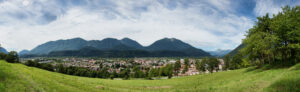
Tolmezzo is the capital of Carnia — the town from which timber convoys once began their journey towards the Venetian plain. The Carnic Museum of Folk Arts and Traditions tells the story of the mountain communities whose way of life sustained the economy of the Serenissima for centuries. In the afternoon, take a walk through the forests surrounding the town to experience it for yourself — these vast, silent woodlands that, even today, stretch for dozens of kilometres in every direction.
Venzone
Twenty minutes south of Tolmezzo, following the course of the Tagliamento River, you reach Venzone — the medieval town that Friuli rebuilt stone by stone after the devastating earthquake of 1976. The Gothic-Venetian Town Hall, crowned by the Lion of St Mark, is a reminder that Venice left its mark here too. The Cathedral, the town walls, the mummies in the Chapel of St Michael and the ruins of the Church of St John the Baptist — deliberately left in ruins as a memorial — make Venzone one of Friuli’s most powerful and moving places.
Spilimbergo and the Town of Mosaics
From Venzone, the route descends towards the plain, following the Tagliamento River to Spilimbergo. The mosaic craftsmen of this region gathered the white stones from the riverbed and carried them to Venice, where they were used to pave the city's palaces — another journey along the same route once travelled by the timber. The Friuli Mosaic School, founded in 1922, is open to visitors from Monday to Friday. You can watch students at work in the workshops, practising the same craft with the same gestures that have been passed down for five centuries.
The Friulian Lowlands
The fourth day unfolds at a slower pace, crossing the Friulian Lowlands — a flat, green plain stretching between the rivers, dotted with quiet villages. Lunch or dinner is at Trattoria Da Toni in Gradiscutta di Varmo, where the Morassutti family have been cooking over the fogolar — the traditional Friulian hearth — since 1928. It is the perfect way to bring the Friuli leg of the journey to a close before reaching the Venetian Lagoon.
Venice
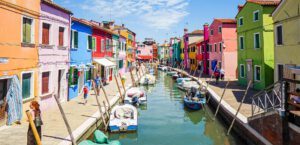
The journey ends in the Venetian Lagoon. A traditional Venetian rowing lesson with Row Venice — using the same wooden boats that have navigated these canals for centuries — brings the story of the route to a fitting close. The timber of Carnia has become a boat. In the evening, dinner at Gatto Nero in Burano: lagoon cuisine, risotto di gò, and the quiet charm of the island outside the tourist season.
Practical Information
The itinerary is best explored by car.
From Tolmezzo to Venice is about 150 km via the A23 and then the A4. But this is an itinerary to be savoured slowly, with plenty of stops and no rush.
The best time to visit is September and October, when the forests of Carnia are ablaze with autumn colours and the lagoon still enjoys the light of late summer.
Experiences along the route
Albergo Diffuso Tolmezzo: Stay in the Carnia That Supplied Venice's Arsenale
Stay
Venzone: The Medieval Village Rebuilt Stone by Stone
culture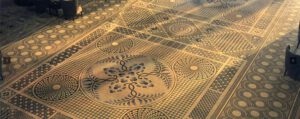
Scuola Mosaicisti del Friuli: Where Venice's Mosaic Floors Were Born, on the Banks of the Tagliamento
culture
Trattoria Da Toni: Since 1928 in the Friulian Countryside, with the Fogolar Always Burning
Food & Wine
Row Venice: learn Venetian rowing with the women keeping Venice alive
culture