Salt pans of Sečovlje: harvesting salt as it was done in the days of the Republic of Venice
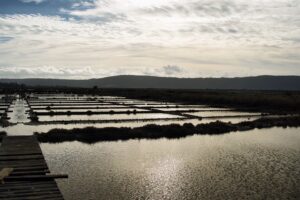
750 hectares of water and white crystals, where salt is still harvested by hand as it was in the 14th century.
Sicciole (Sečovlje), Slovenia
The Sečovlje Salt Pans are mentioned as early as a document from 1139. After Apulia, they were the largest salt producers in the Adriatic—and for Venice, salt was as valuable as hard currency. Today, it is still harvested by hand using the same traditional methods.
The Sečovlje Salt Pans are the northernmost salt pans in the Mediterranean, located at the mouth of the Dragogna River on the border between Slovenia and Croatia. During the rule of the Republic of Venice, strict control was enforced over the trade of the salt produced here—one of the Serenissima’s most strategic sources of wealth.
The park can be visited on foot or by bicycle along the paths that run beside the salt evaporation ponds. In summer, with the “Salt Worker for a Day” experience, visitors enter the pans alongside the salt workers and learn the traditional harvesting technique. The salt produced—known as Piran Salt—is today a typical food product recognized at European level.
In autumn and spring, the salt pans are filled with pink flamingos and hundreds of species of migratory birds—they are the most important birdwatching site in Slovenia. A place that never fails to surprise.
This is an independent editorial feature.
Photo ©kpss.si
Practical Information
Location: Sicciole (Sečovlje), Slovenia
Duration: 2-3 hours
Estimated price: Entry from €5 · Salt worker for a day from €15