The Salt Route: Five Days Along the Serenissima’s White Gold Route
Salt was one of the foundations of the Republic of Venice’s power. It was not simply a seasoning—it was currency, influence, and the reason many coastal towns existed as they did. From the 13th century onwards, the Republic sought to secure a monopoly over this essential commodity, extending its control over the salt pans of the Istrian coast, with Piran at the forefront. This itinerary follows that route in reverse—not from the lagoon to the sea, but from the Istrian salt pans where the salt was harvested back to Venice, where it was stored, traded, and transformed into wealth. Five days through lagoons, borderlands, and white crystals.
The Stops
Venice: The Salt Warehouses and the Lagoon That Produced It
Venice is best understood once you realise it was built on salt. In the Middle Ages, salt pans covered much of the lagoon, providing Venice with the precious commodity it traded for the goods it lacked — grain, iron and timber. The salt warehouses at the Zattere, now home to the Fondazione Vedova, were the logistical heart of this trade. A walk along the Zattere, overlooking the Giudecca Canal, is enough to imagine the merchant ships once arriving heavily laden with cargo.
On the first evening, dinner at Osteria Ca' d'Oro alla Vedova — a historic bacaro serving authentic Venetian cuisine, with a glass of ombra before turning in for the night.
Burano and Mazzorbo: The Northern Lagoon
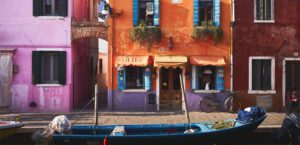
The second day is devoted to the northern lagoon — the quieter side of Venice, far from the crowds. Spend the morning with the San Marco Fishing Cooperative on a traditional fishing excursion from Burano, heading out among nets, fish traps and the barene, the lagoon's salt marshes. Lunch is at Gatto Nero, famous for its risotto di gò — a dish found nowhere else.
In the afternoon, cross the wooden bridge linking Burano to Mazzorbo and arrive at Venissa — home to the walled vineyard, the rare Dorona dei Dogi grape, and the wine that was almost lost in the devastating flood of 1966. Few places tell the story of Venice better than this one.
Marano Lagunare: Venice’s Last Fortress
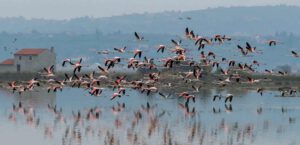
From Venice, it is a ninety-kilometre drive east along the Friulian coast to Marano Lagunare. Once a fortress of the Serenissima, Marano still preserves Piazza dei Provveditori, the Millenary Tower and narrow alleyways scented with fish and sea salt. The afternoon is best spent exploring the lagoon by batana, gliding through winding channels, past traditional reed fishermen's huts and into the protected Stella River Mouth Nature Reserve — a lagoon that still resembles the Venetian Lagoon of a thousand years ago.
Trieste and Muggia: The Border
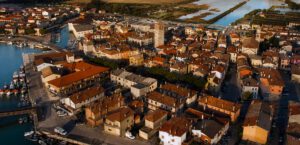
Trieste is not Venetian—it is Habsburg, Central European, a city that has always looked towards Austria. Yet it is here that the frontier truly begins to make sense. Spend the morning exploring Piazza Unità d'Italia and the Teresian Quarter, then continue to Muggia, just ten minutes away by car or a twenty-minute ferry ride from Molo Audace. Muggia is the last Venetian town on Italian soil: a Gothic-Venetian cathedral, a fishing harbour lined with colourful boats, and narrow calli that still echo the Serenissima. Lunch at a traditional trattoria overlooking the harbour.
Piran and the Sečovlje Salt Pans: The Source
The final stop is also the oldest. In 933, the towns along the eastern Adriatic pledged to sell their salt to the Republic of Venice—and Piran proved the most loyal and the most productive of them all. Spend the morning exploring the town: Tartini Square, the Bell Tower of St George, and the Venetian House, with its famous inscription, Lassa pur dir ("Let them talk"). Those wishing to extend the journey by a night will find Art Hotel Tartini, right on the main square, an ideal place to stay.
The afternoon is spent at the Sečovlje Salt Pans, just fifteen minutes south of Piran on the Croatian border. The salt pans were first mentioned in a document dating back to 804. With the "Salt Worker for a Day" experience, visitors step into the evaporation ponds alongside the salt harvesters and handle the very salt that financed Venice for a thousand years. White crystals, still water, complete silence.
Practical Information
By car: the itinerary is best explored with your own vehicle. From Venice to Marano Lagunare it's around 90 km (about 1 hour 15 minutes); from Marano to Trieste, 70 km (around 1 hour); and from Trieste to Piran, 40 km (about 45 minutes). Muggia can also be reached by ferry from Trieste's Molo Audace during the summer, with regular services.
Recommended period: May–June or September–October. The salt pans can be visited year-round, but the salt harvest takes place from May to September.
Parking: there is no parking within Piran's historic centre. Leave your car at the Fornace car park (approximately €1.50/hour) and walk into town.
Advance booking required: the Cooperativa San Marco fishing experience, Venissa restaurant, the guided tour of Piran, and the Salt Maker for a Day experience at the Sečovlje Salt Pans.
Experiences along the route

Fishing Tourism with Cooperativa San Marco: a morning in the lagoon with Burano’s fishermen
nature
Ca’ d’Oro alla Vedova: the bacaro of meatballs and the giro d’ombra
Food & Wine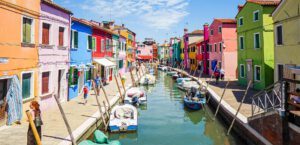
Trattoria Al Gatto Nero: the lagoon cuisine Burano has always kept to itself
Food & Wine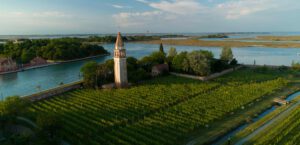
Venissa: the walled vineyard that brought the Doges’ wine back to life
Food & Wine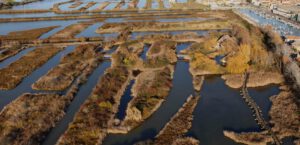
Marano Lagoon: a boat excursion into the forgotten stronghold of the Serenissima Republic of Venice
nature
Art Hotel Tartini: stay on Tartini Square, in the Venetian heart of Piran
Stay