There is a town in Friuli that was once the capital of a kingdom, home to the first Lombard duchy in Italy, and guardian of one of the finest masterpieces of early medieval architecture recognised by UNESCO — yet most travellers who visit the region never make it there.
Its name is Cividale del Friuli. It lies just twenty minutes from Udine by train. And it deserves far more attention than it receives.
Forum Iulii
Cividale is almost as old as Rome itself. Fondata in epoca romana con il nome Forum Iulii, fu poi capitale del primo ducato longobardo d’Italia. Founded in Roman times under the name Forum Iulii, it later became the capital of the first Lombard duchy in Italy. The name of the entire region — Friuli — comes from that Roman settlement. Every time you say “Friuli”, you are, knowingly or not, invoking the name of this town.
When the Lombards arrived in 568, they chose Cividale as their centre of power in Italy, transforming it into the political and cultural heart of a new kingdom that would leave a lasting mark on the history of the peninsula. The town still preserves remarkable traces of the Lombard period, foremost among them the Tempietto Longobardo. Adorned with Byzantine frescoes and exquisite stucco decorations, it was built in the second half of the eighth century as the chapel of the Benedictine convent of Santa Maria in Valle.
What to See in Cividale del Friuli: The Lombard Temple
The Tempietto is located in Cividale del Friuli, within the former Ursuline Monastery. It is reached through an ancient wooden doorway that opens from the monastery cloister, creating the feeling of stepping into a place that has remained almost untouched by time. It is considered the most important and best-preserved architectural monument of the Lombard period anywhere in Europe.
What strikes you upon entering is not its size — the building is small, almost intimate — but the extraordinary quality of what has survived. The stucco figures that decorate the entrance arch are among the best-preserved examples of early medieval sculpture in Europe. The faces are almost entirely intact. The folds of their garments are still visible. Visitors can also explore the Tempietto Longobardo, the Monastery of Santa Maria in Valle and the Church of San Giovanni as part of a single visit, as all three belong to the same architectural complex. Together, they offer a deeper understanding of the religious, artistic and historical significance of one of the most important Lombard sites in Italy.
It is worth the journey on its own.
The Devil’s Bridge and the Natisone River
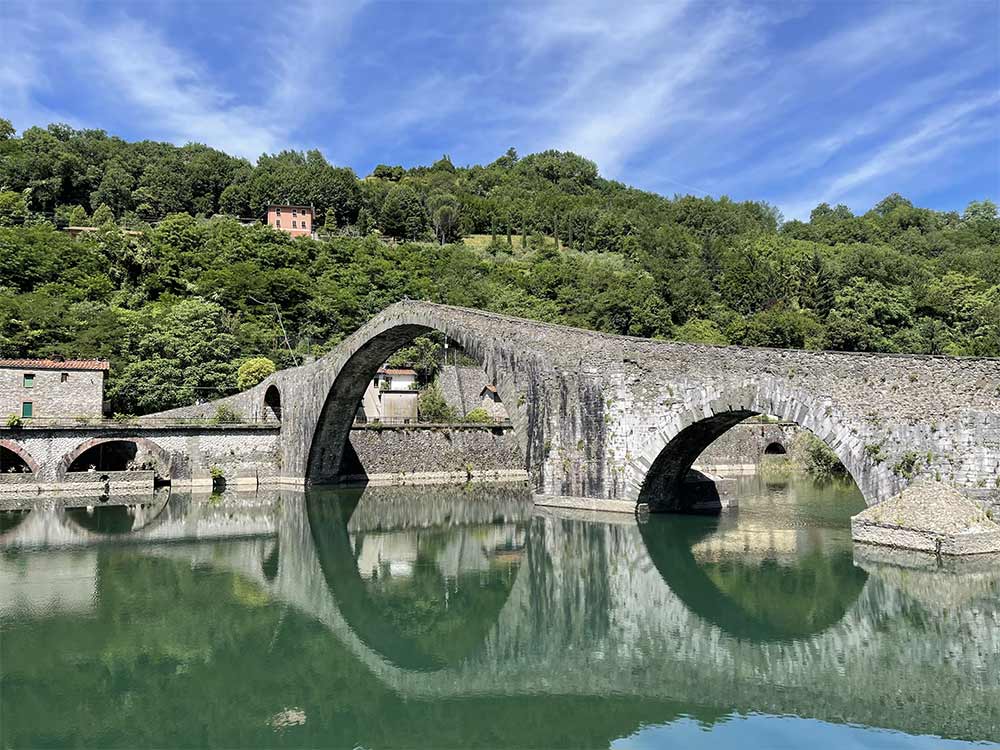
Before or after visiting the Tempietto, the historic centre can easily be explored on foot in less than an hour — cobbled lanes, quiet squares and Venetian palaces serving as reminders that Cividale, too, once formed part of the Serenissima’s mainland domain. But the moment that stays with you is the one spent on the Devil’s Bridge.
The medieval bridge spanning the Natisone is one of the most photographed landmarks in Friuli, yet photographs never quite do it justice. You have to stop on the bridge, lean against the stone parapet and look down — at the emerald-green river below, the exposed rock faces, and the walls of the gorge narrowing beneath your feet. According to legend, the Devil built the bridge in a single night in exchange for the soul of the first living creature to cross it. The people of Cividale sent a cat.
Before you go
The Palazzo dei Provveditori Veneti, built between 1565 and 1615 to a design attributed to the architect Andrea Palladio, is home to the Archaeological Museum of Cividale. Its collections span Roman, Early Christian and early medieval history, with an entire section dedicated to the Lombard Kingdom and the people who made Cividale their first capital in Italy. If you’re travelling with children, the museum is worth visiting for the fibulae alone — the finely crafted gold brooches worn by Lombard women, many of them recovered from the town’s ancient burial grounds. They are objects that reveal just how far the Lombards were from the crude image of barbarian invaders that history has often attached to them.
Cividale can be comfortably explored in half a day — the historic centre is compact and entirely walkable. The best advice is to arrive early in the morning, when the lanes are still quiet and the Tempietto can be visited without queues. The National Archaeological Museum in Piazza del Duomo is well worth an extra hour of your time. The Lombard gold fibulae discovered in the town’s burial grounds are among the finest early medieval artefacts in Italy — objects of extraordinary craftsmanship that bring the world of the Lombards vividly back to life. For those staying for lunch, the traditional osterias of the historic centre serve the classics of Friulian cuisine: frico, gubana and wines from the Colli Orientali. Cividale is also the natural gateway to the Natisone Valleys. If you have the time, the road that follows the river towards Slovenia is one of the most scenic drives in all of Friuli — winding through forests, stone villages and landscapes that feel increasingly remote with every kilometre. It pairs perfectly with a visit to the Collio wine region. In fact, Cividale is the first stop on the Secret Friuli itinerary, which continues from here through the wineries and hilltop villages of the Gorizia Collio.