
Wineries in Friuli hold some of Europe’s most underrated wine country — hills shaped by ancient volcanoes and marine soil, a border that has shifted for centuries without ever stopping the vines. Wine has never respected frontiers in this corner of Europe: the same land has produced labels under the Republic of Venice, under the Habsburgs, under Yugoslavia, and today under three different flags. What changes is the label; what stays the same is the land underneath.
Wineries in Friuli are concentrated above all in two areas of excellence — the Collio, recognised as one of Italy’s most prized wine territories, and the Karst, with its unique minerality drawn from limestone rock. But the story widens: beyond the border, in Slovenia’s Brda, the same terroir continues under another name; to the south, in the Euganean Hills, a different volcanic geology signs equally surprising wines; and in Venice itself, among the canals of the lagoon, a vineyard survives that few would expect to find.
Wineries in Friuli: The Best by Territory
Each territory has its own character, its own soil, its own history of border. Here are eleven addresses — four zones, one single thread.
The Collio: Where Italy Meets Slovenia
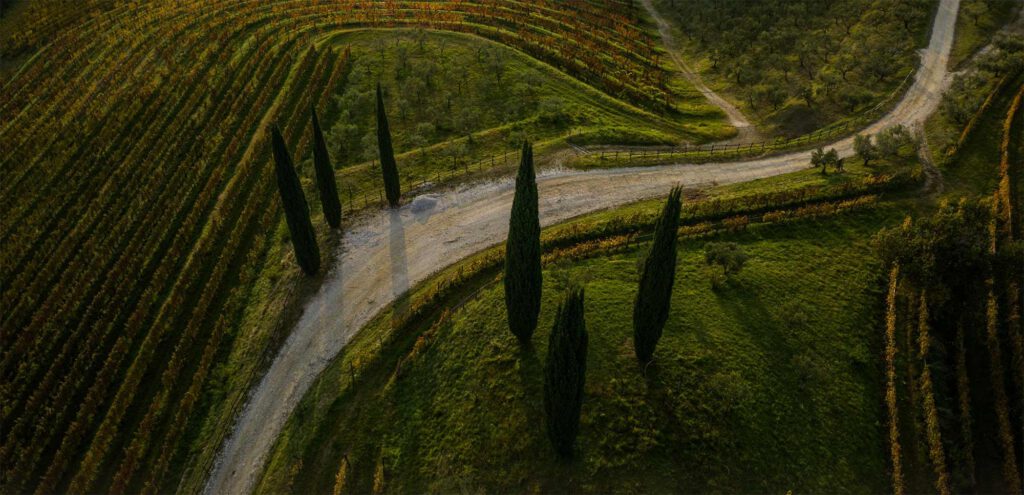
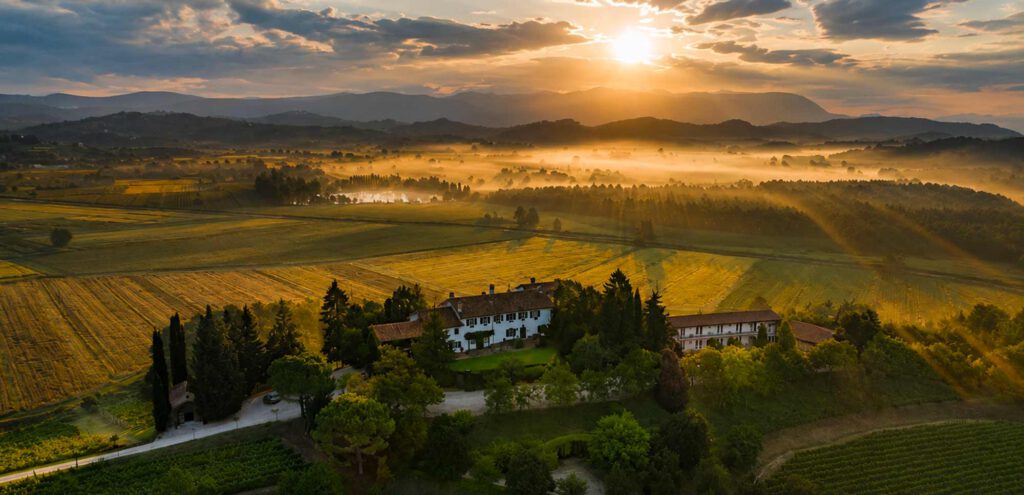
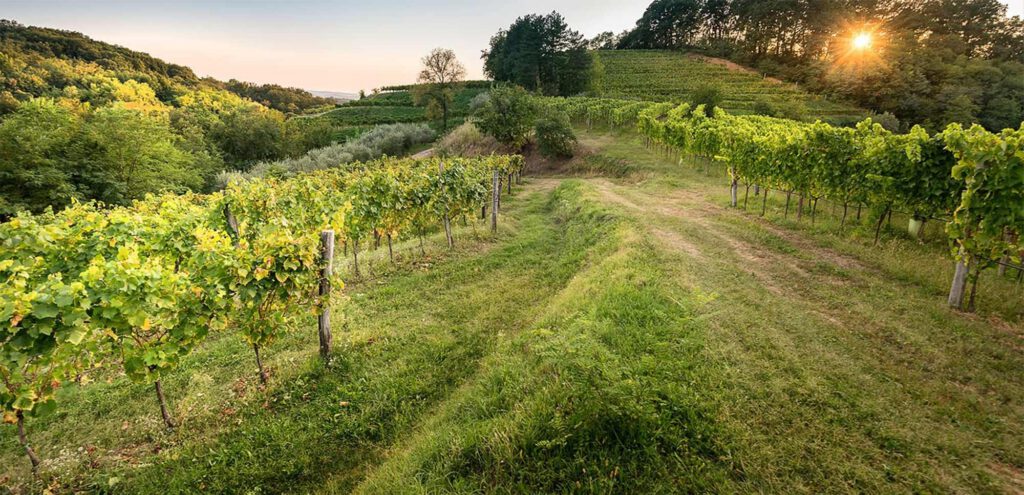
The Collio is the heart of this territory — a narrow band of hills between Gorizia and the Slovenian border, on soil so distinctive it has its own name. The Collio is today one of the region’s eleven protected designations, recognised by the Consorzio Tutela Vini Collio for the exceptional quality of its whites.
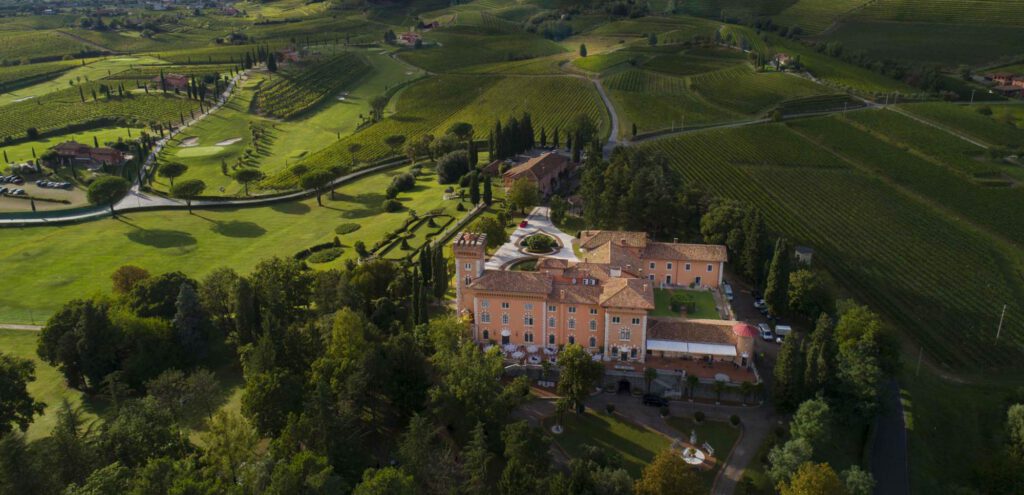
Here Livio Felluga has been drawing the Collio in wine for five generations, each label carrying a hand-drawn map of the estate. Russiz Superiore adds seven centuries of winemaking history and some of the region’s most age-worthy whites. At Castello di Spessa, the cellars are medieval, the bunker is Cold War, and the Pinot Nero carries the name of Casanova himself. And for those who want to sleep among the vines, Borgo Gradis’ciutta sits exactly on the line that Venice and the Habsburgs once contested.
Brda: The Collio That Speaks Slovene
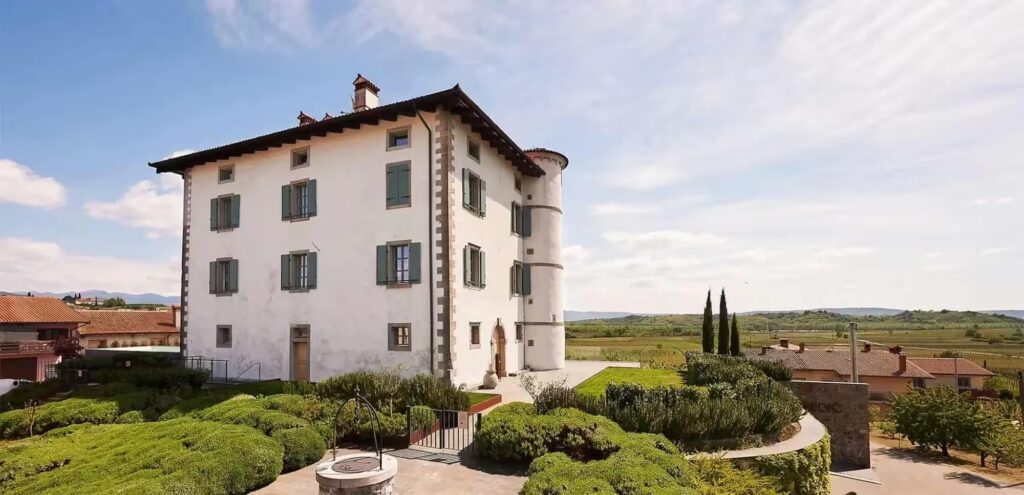
Crossing the border, the same hills continue under another name — Brda, Slovenia’s answer to the Collio, quieter and less discovered. Movia has been making natural wine here for three hundred years, on a border that today exists only on paper. Gredič, inside a 16th-century castle, pairs its cellar with Michelin-level cooking.

The Karst: Stone, Wind and Vitovska
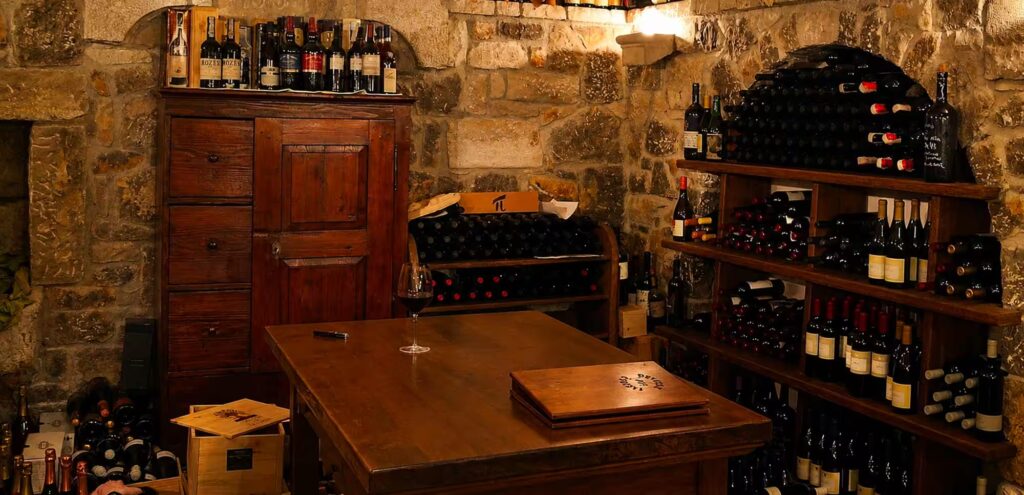
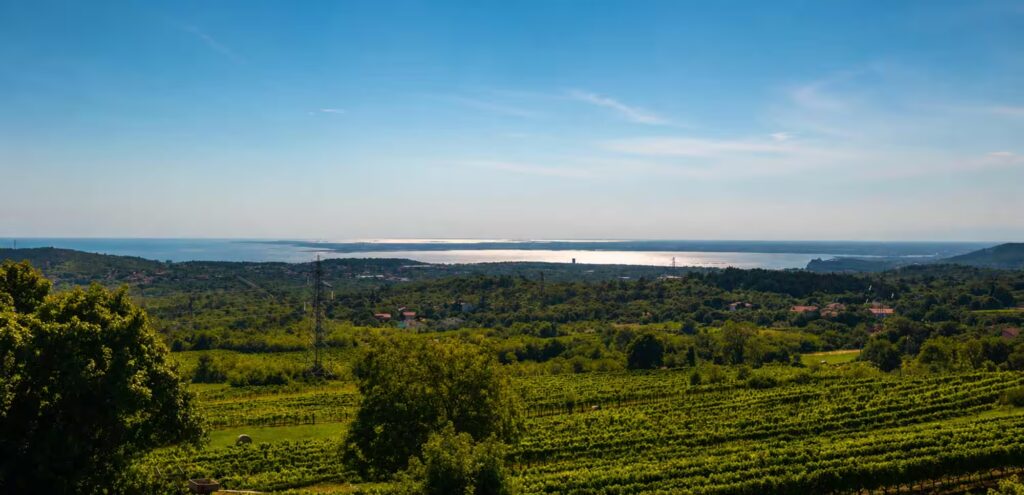
East of Gorizia, the land turns to karst — a plateau of limestone and red soil, swept by the bora wind. Zidarich carves its cellar directly into that rock, and the wines carry the minerality to prove it. Lokanda Devetak, a restaurant since 1870, holds a cellar of over 13,000 labels — one of the most serious wine collections in the entire region.
The Euganean Hills: Venice’s Volcanic Secret
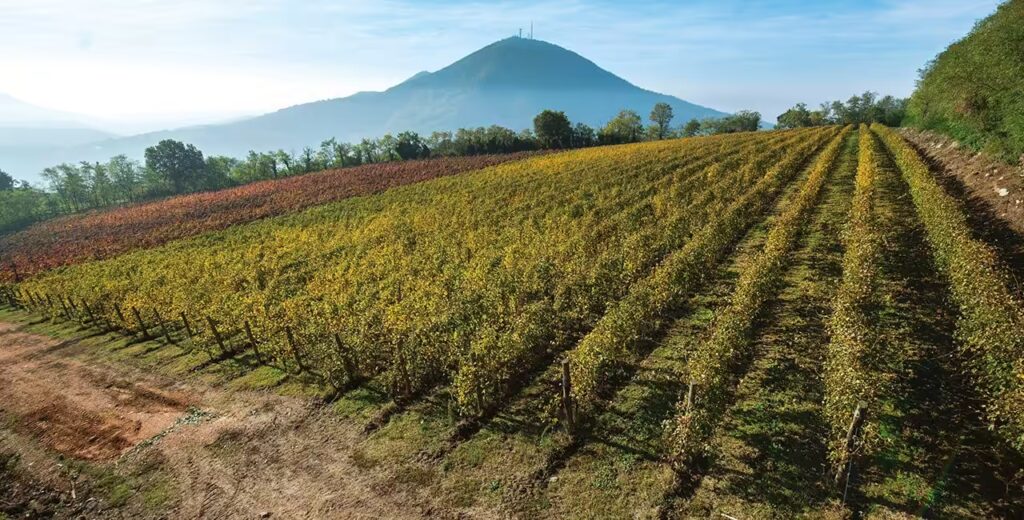
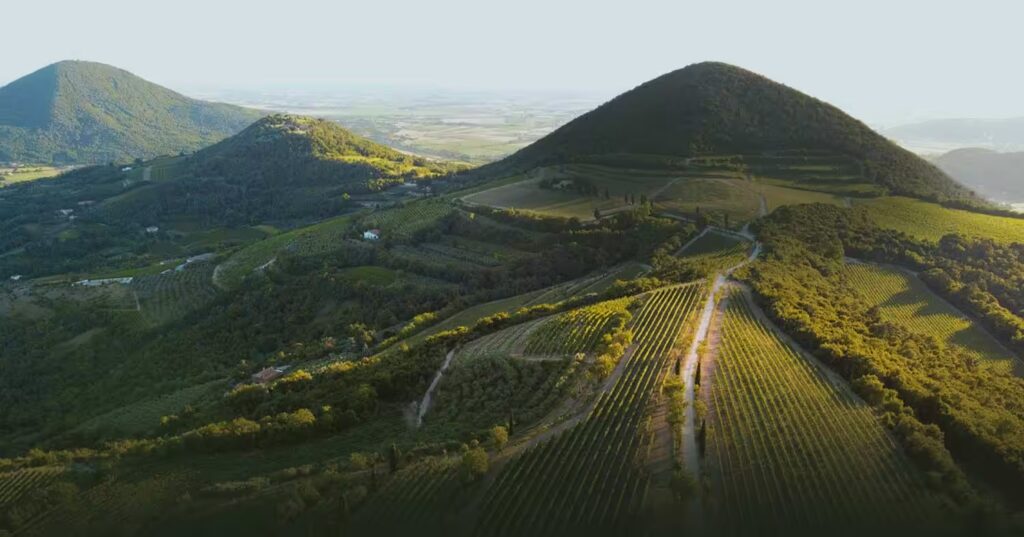
Further south, in the Veneto, an entirely different geology takes over — the Euganean Hills, extinct volcanoes now covered in vineyards. Vignalta, carved into Monte Gemola, holds Gambero Rosso’s Tre Bicchieri award. Le Volpi offers a stay among the same volcanic vineyards where Venetian nobles once spent their summers.
Venice: The Vineyard on the Lagoon
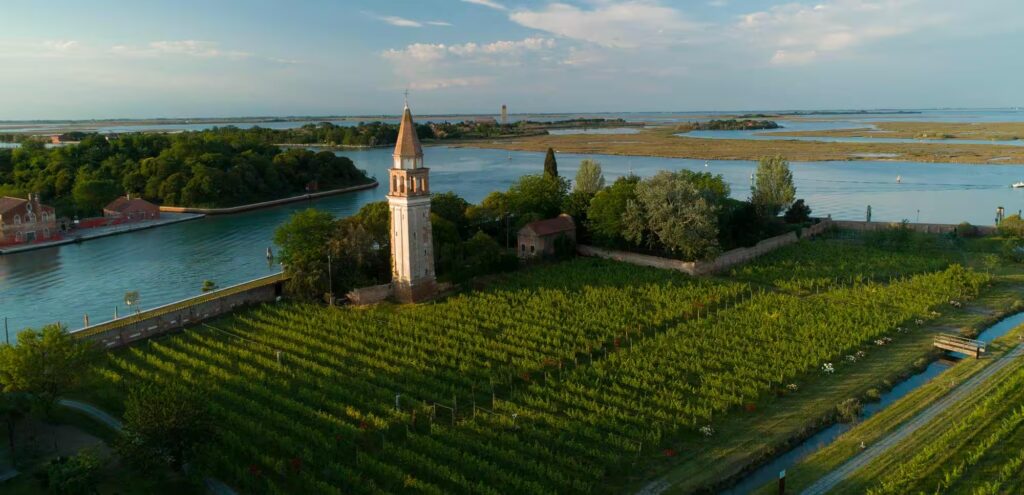
And then there is Venissa — a single walled vineyard on the island of Mazzorbo, where the historic Dorona grape, the wine of the Doges, was brought back from near-extinction. It is, in a sense, where this whole story comes full circle: the wine that Venice itself once drank.
Wineries in Friuli reward those who travel slowly — whether you follow the Collio into Slovenia, cross the windswept plateau of the Karst, or climb the volcanic hills south of Venice, this territory rewards those who take their time — one glass, one border, one hillside at a time.